

 Who Gets the Cottage? Why August Is the Month to Have the Talk
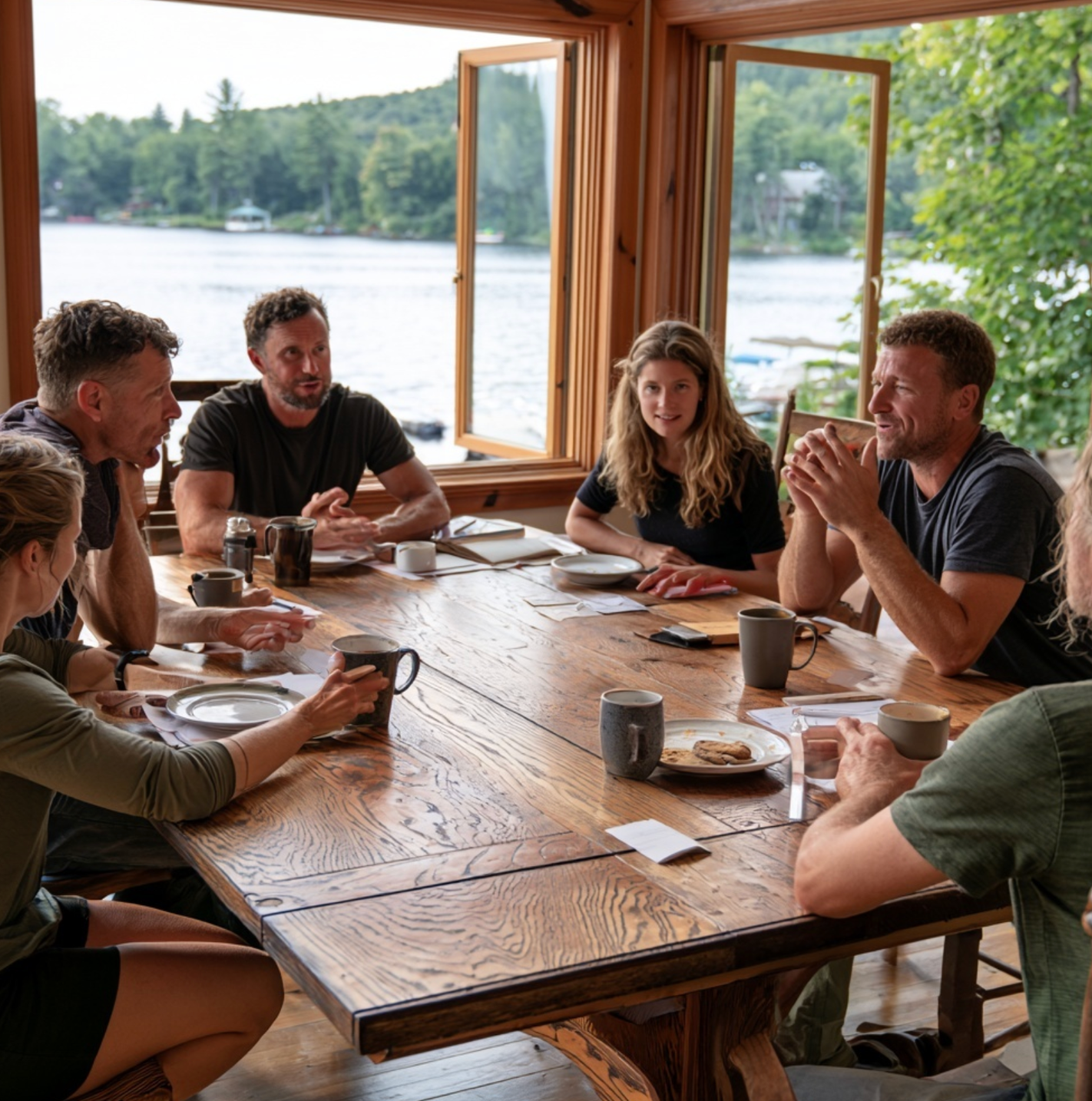
Right now, all around Lake of Bays, three generations are sharing the same dock. Grandparents watching grandkids cannonball off the end, adult children flipping burgers, everyone gathered in the place the family loves most. It happens every August. And it makes this month, quietly, the single best time of year to have the conversation most cottage families keep putting off: what happens to this place down the road?
Why we avoid it
Nobody wants to talk about the cottage's future. It feels morbid, or premature, or like inviting an argument into paradise. So the conversation gets postponed — sometimes for decades.Here's what I've seen in my years on this lake: silence is the most expensive option. When there's no plan, families are left making enormous decisions under the worst possible circumstances — grieving, rushed and sometimes at odds with one another. I've watched siblings who spent fifty summers together end up barely speaking over a cottage none of them planned for. And I've watched beloved family properties sold in a hurry, at the wrong time, because a tax bill arrived before a plan did.
None of that is inevitable. It just takes a conversation — ideally one that starts on a warm evening when everyone is already at the lake.
How to actually start the conversation
The hardest part is the first sentence, so let me offer a few you can borrow. Over dinner or on the dock, try something like: "We've had so many good summers here — I'd love to hear what everyone hopes happens with this place someday." Or, if you're one of the adult children: "Mum, Dad — have you two ever talked about what you'd want for the cottage long term? We'd love to know what you're thinking."Notice what these openers have in common. They ask, rather than announce. They invite everyone's hopes before anyone's plans. And they carry no deadline — this is the beginning of a conversation, not the end of one.
You're not solving anything in one evening. You're just learning where everyone stands, and you may be surprised. Sometimes the child everyone assumed would take the cottage has quietly been dreading the upkeep. Sometimes the one who lives furthest away cares the most. Sometimes two siblings want it and a third would rather have her share in other assets — and there's genuine relief all around once that's finally said out loud.
The main paths, in plain language
Once you understand what the family wants, the options come into focus. Most families land on one of six paths, and each suits a different situation.Passing it through the estate. The cottage transfers to the next generation through your will. Simple to set up, but it leaves the tax bill and the sharing arrangements for your children to sort out later — so it works best when paired with clear instructions and some planning for the taxes.
Transferring during your lifetime. Some families move ownership to the next generation while the parents are still enjoying the cottage. This can create certainty and let parents see the tradition continue, but it triggers tax consequences at the time of transfer and deserves careful professional advice.
Co-ownership among siblings. Two or more children share the cottage under a written agreement covering costs, scheduling, maintenance and — critically — what happens if one wants out. The families who make this work all have one thing in common: the rules were written down while everyone was still getting along.
One child buys out the others. When one sibling truly wants the cottage and the others don't, a buyout at fair value keeps the property in the family and keeps things even. This is where an honest, current valuation becomes essential — more on that below.
A family trust. The cottage is held in trust for the benefit of the family, with rules set out in the trust document. More complex and more costly to establish, but it can suit families with significant assets or complicated dynamics. Your lawyer can tell you whether it fits.
A planned sale. Sometimes the honest answer is that no one is positioned to take the cottage on — and that's okay. A sale planned on your own timeline, in the right season, at full market value is a far better outcome than a rushed sale under pressure. The proceeds can fund new traditions, and the memories come with you.
There's no universal right answer. But there is almost always a right answer for your family, and it emerges from honest conversation plus good professional advice.
The tax reality
One thing every cottage family should understand: a cottage that has been in the family for decades has likely appreciated enormously, and in most cases that growth is subject to capital gains tax when the property changes hands. On a Lake of Bays waterfront property, that can be a very significant number — and it can catch unprepared families completely off guard.I'm not an accountant and this isn't tax advice. But I can tell you the families who navigate this well all have one thing in common: they talked to their accountant and their lawyer early, while there was still time to plan. Years of runway create options. Weeks of runway create stress.
The mistakes I see most often
A few patterns come up again and again, and naming them may help you avoid them.Waiting for the right time. There is no perfect moment for this conversation, and the search for one is usually just postponement wearing a disguise. An ordinary August evening is as right as it gets.
Assuming the kids want it. Love for the cottage and readiness to own it are two different things. Taxes, upkeep, travel distance and busy lives all factor in. Ask — don't assume.
Treating equal as identical. Fair doesn't always mean everyone gets a share of the cottage. Sometimes fair means one child gets the cottage and the others get equivalent value elsewhere. Families that confuse the two often end up with four reluctant co-owners instead of one happy one.
Leaving it all in one person's head. If the plan exists only in Mum and Dad's intentions, it isn't a plan. Write things down, involve the professionals and make sure the family has heard it directly from you.
A simple sequence to follow
If this article prompts anything, let it be this four-step path.First, have the family conversation — this month, while everyone is at the lake.
Second, get a current, honest valuation of the property, because every option depends on knowing what the cottage is actually worth today.
Third, sit down with your accountant to understand the tax picture and your planning options.
Fourth, see your lawyer to put the chosen path in writing.
That's it. Four steps, taken in order, at whatever pace suits your family. Most people find the first step is the hardest and everything after it is easier than they feared.
That's it. Four steps, taken in order, at whatever pace suits your family. Most people find the first step is the hardest and everything after it is easier than they feared.
Where I fit in
Every one of these conversations — whether it leads to a transfer, a buyout, a trust or a sale — starts from the same place: knowing what the cottage is actually worth today. Not what the neighbour's place sold for in 2022, and not the assessment notice. An honest, current valuation grounded in real Lake of Bays waterfront sales.That's where my team and I can help. We provide confidential valuations for exactly this purpose, with no listing expected and no pressure attached. It's simply the first fact your family needs, whatever you decide.
So while everyone is still at the lake this month, consider starting the conversation. The setting will never be better — and future generations on that same dock will be glad you did.
If you'd like a confidential valuation or just a sounding board, reach out anytime or stop by our office in Dwight. Over two decades of walking Lake of Bays' shorelines have taught me that the right decision isn't just about the numbers—it's about understanding what matters most to you and your family.
Let's have a real conversation. Reach out at 705-571-2118 or jay@jayrichardson.ca, and we'll chart a path forward together.
Jay Richardson is the broker and owner of The Richardson Team — Refined Real Estate, Royal LePage, in Lake of Bays.
This article is general information, not legal or tax advice — please consult your accountant and lawyer about your family's situation.