

by Jay Richardson, Broker
Lake of Bays' new septic inspection program — and why the savviest cottage owners are already getting ahead of it.
There is no glamorous way to write about a septic system. I have made my peace with this. In over twenty‑five years of practising real estate in Muskoka and Lake of Bays, I have watched buyers tour properties and admire the granite, the sunsets and the boathouse — and then politely change the subject the moment the words "leach bed" enter the conversation. The septic is the part of cottage ownership no one wants to talk about, right up until the moment it is the only thing anyone is talking about. That dynamic is about to change — and on balance, for the better.
What is happening
In April 2026, the Township of Lake of Bays Council approved the Sewage System Maintenance Inspection Program — the SSMIP, for those who enjoy a good acronym. It is a phased, risk‑based program that will bring inspectors to waterfront and near‑water properties across the township to assess the private septic systems quietly serving nearly every cottage and rural home in the region.
If you own waterfront in Lake of Bays, this affects you. If you are thinking of buying or selling, it affects you sooner.
If you own waterfront in Lake of Bays, this affects you. If you are thinking of buying or selling, it affects you sooner.
Why the township is doing this
The reasoning is, refreshingly, common sense. Private septics manage wastewater for almost every property out here. When they function properly, they protect drinking water, the lakes and the rivers we tell our grandchildren about. When they fail, they contribute to contamination, algae blooms and the kind of repair bills that turn a great summer into a memorable one for the wrong reasons.As Township Chief Building Official Taeke Peereboom noted at the announcement, a great many Ontario septics have been quietly working underground for decades. The Ontario Building Code requires private sewage systems to be properly maintained. Municipalities across the province are now introducing programs like this to get ahead of the problem rather than chase it.
Lake of Bays is not the first Muskoka municipality to take this step. It will not be the last. The township's goal — stated plainly — is to catch the small things before they become large, expensive ones, while protecting the lakes that make this region what it is. That is a goal worth supporting, even when it arrives in your mailbox with your address on it.
Who is affected and how the program works
Properties with a daily flow under 10,000 litres — which captures essentially every residential cottage and waterfront home in the township — must be inspected every ten years. The schedule is risk‑based and built around three tiers:Low hazard. Properties not on the waterfront or near water, or where the septic system is less than fifteen years old. These properties are not on the inspection schedule at this time. Consider yourselves the lucky neighbours.
Medium hazard. Waterfront and near‑water properties with systems aged fifteen to thirty years. These receive a non‑invasive, above‑ground inspection: visual checks, site conditions and basic measurements. No fee.
High hazard. Waterfront and near‑water properties where the system is more than thirty years old, or where no septic permit is on file. The owner must uncover both tank lids, a third‑party inspector completes the assessment and a fee in the range of $400 to $600 applies.
Inspections begin in 2026 with medium and high hazard waterfront and near‑water properties in the Franklin ward. Owners on the list will receive a formal notice.
Worth noting in plain language: this is not optional. Inspections are required under Township Property Standards By‑law 2026‑041 and Building Department Policy BL 2.1. Refusing an inspection is a by‑law violation and may result in a fine. The township is being polite about it. It is also being clear.
One further trigger to keep in mind: certain applications can pull a septic inspection forward on their own. Apply for a short‑term rental licence, a building permit or another approval that increases occupancy or wastewater use, and the township may require an inspection to confirm the system can support the proposed use. If 2027 STR plans are on the horizon, this is worth knowing now.
If you are selling
This is where the program leaves theory and meets your closing statement.A septic system that cannot pass inspection is a material fact. It must be disclosed. In today's market, a prepared buyer's agent will ask about the septic with the same precision they apply to roof age and shoreline frontage. They will want to know whether the property has been inspected, what the outcome was and whether anything remains outstanding. If you cannot answer those questions confidently — or if the answers are unfavourable — you are negotiating from a position of weakness before the first offer is even drafted.
The fix is straightforward: know where you stand before you list. If your property falls into the medium or high hazard category, pursue your inspection now — on your timeline, not under the duress of a conditional offer. Many issues can be resolved through targeted repairs or routine maintenance rather than full replacement, as the township's own FAQ acknowledges. Addressing a deficiency on your terms almost always costs less, takes less time and produces a cleaner outcome than negotiating a price reduction mid‑transaction.
A property that has been inspected, with documentation confirming the system is in good working order, brings something quietly powerful to the negotiating table: confidence. Buyers pay for certainty. A clean septic record is a small but meaningful component of a well‑positioned waterfront listing.
If you are buying
For buyers, the SSMIP is a welcome upgrade in transparency. Waterfront purchases in Muskoka are generational decisions, and the septic has historically been one of the hardest components to evaluate without a dedicated inspection. Knowing that the township is now keeping structured, risk‑based records adds a useful new layer to your due diligence.It does not, however, replace the value of an independent septic inspection as a condition of your offer. The two serve different purposes. The SSMIP identifies systemic risk and confirms Building Code compliance. An independent inspection, completed by a licensed septic professional, evaluates the specific condition of the system on the day you are buying it. For any waterfront property with a system of meaningful age, both are worth pursuing.
Ask your agent about the septic history of any property you are seriously considering. When was it last pumped? Have any repairs been made? Has the property received an SSMIP notice? These are not difficult questions — and a seller who can answer them readily has clearly been doing their homework.
Preparing for your inspection
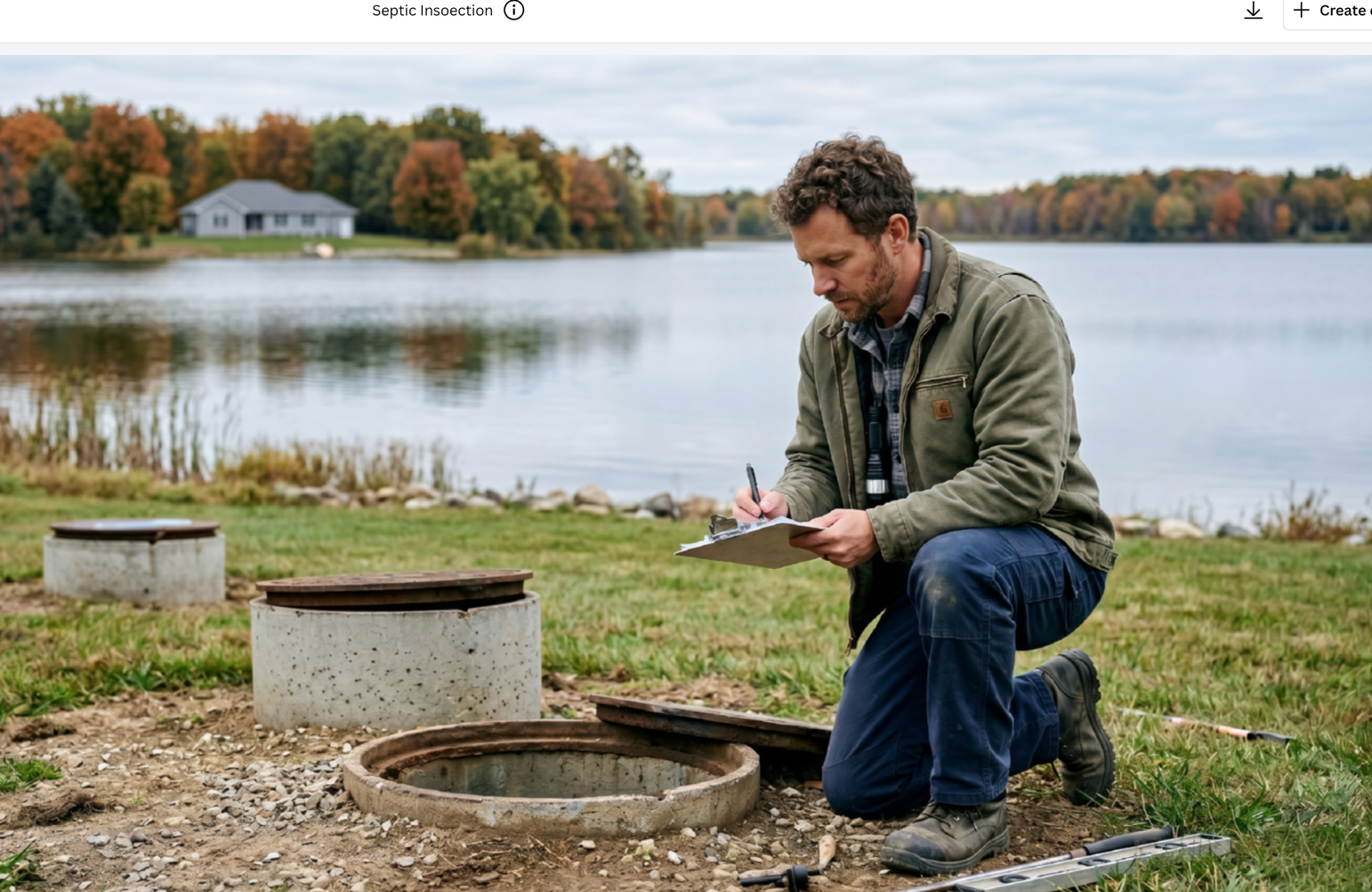
A few practical notes for owners who receive a notice. Do not pump your tank before the inspection — that quite literally washes away the evidence the inspector is there to assess. Make sure the area around your tank and bed is accessible. Gather any records you can find: permits, pump‑out receipts and service agreements. For high hazard properties, both tank lids must be exposed before the inspector arrives.Full program details, an FAQ and homeowner resources are available directly from the township at lakeofbays.on.ca/septics.
A lake worth protecting
Lake of Bays properties command the premiums they do because the lake itself is extraordinary — clear, clean and still uncrowded by Ontario standards, with a shoreline that has been quietly cared for across generations. Protecting that water quality is not a bureaucratic exercise. It is the foundation of every dollar of value this market holds.The SSMIP is how a community takes that responsibility seriously. For owners who have maintained their systems well, the program is an opportunity to document that care and convert it into a tangible selling asset. For those who have deferred maintenance — entirely understandable for a system designed to be invisible, silent and reliable until it isn't — it is an early warning that is far less costly to address now than later.
If you have received an inspection notice, are preparing to sell a Lake of Bays property, or are weighing a purchase and want to understand how to properly evaluate a septic system as part of your due diligence, I am always glad to walk through it with you. A well‑functioning septic protects your property value, your family's enjoyment of the cottage and the long‑term health of the lake we all share.
Some of the best questions in real estate are the ones nobody wants to ask first. Septic, for many years, has been one of them. Far better to ask early — and quietly — than to discover the answer in front of a buyer.
Whether you're dreaming of your first cottage on the water or considering the sale of a property you've loved for years, I would be glad to help you navigate the market with clarity and care. Having personally walked the shorelines and back roads of Lake of Bays for over two decades, I bring the kind of local insight that turns a good decision into the right one. Reach out anytime at 705-571-2118 or jay@jayrichardson.ca — I would always rather have a candid conversation today than a difficult one down the road.